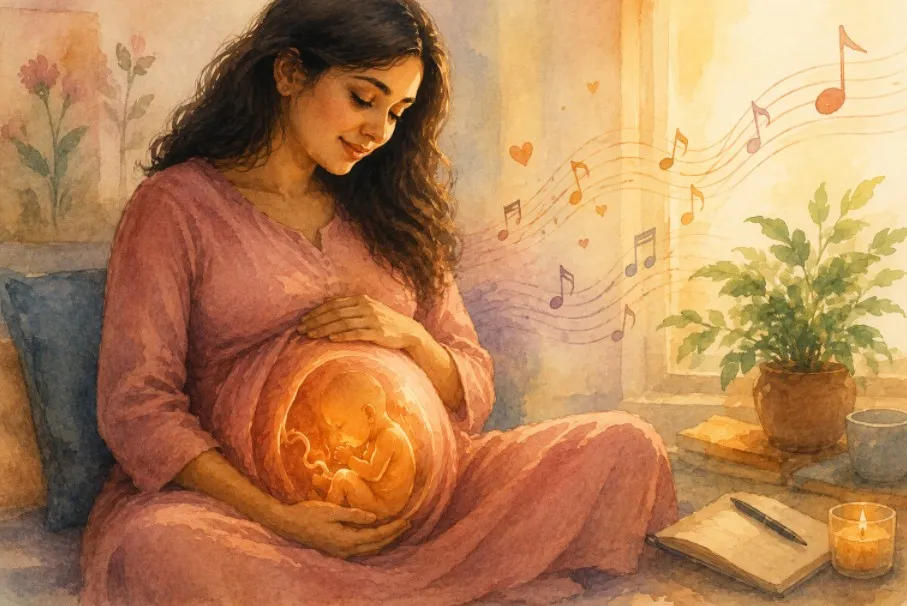
The First Home of a Child: How a Mother's Mind Shapes a Baby in the Womb
Before a Child Sees the World, They Experience Their Mother's World
By Shwetha B R | 23, Jun, 2026 09:48 AM
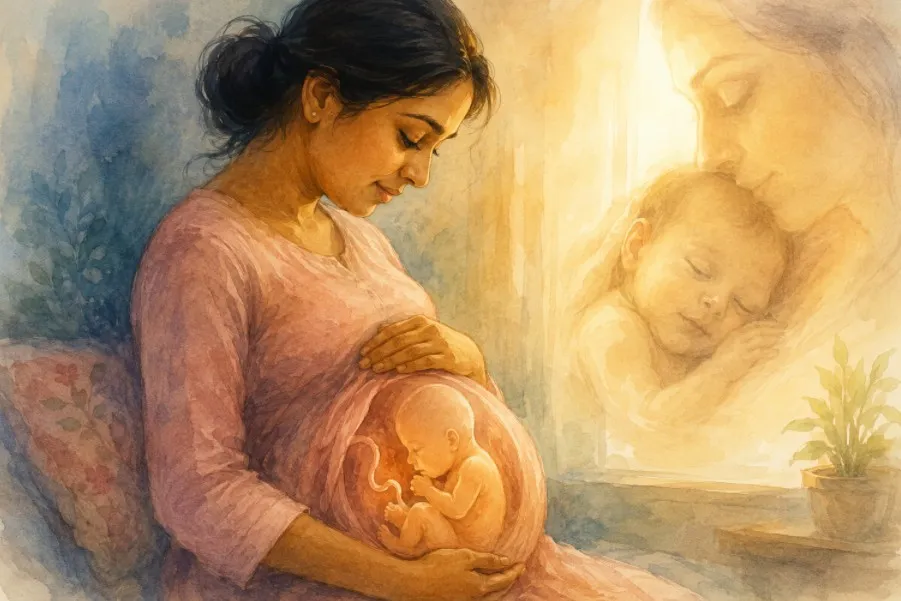
"Every loving thought, every silent prayer, and every moment of peace becomes part of a baby's first experience of life."
The Journey Begins Earlier Than We Think
When does parenting begin?
Most people would say that after a baby is born.
Some may say it begins when a mother first holds her child in her arms.
But psychology, science, and even ancient wisdom suggest something remarkable: parenting begins much earlier.
It begins in the womb.
Before a baby opens their eyes to the world, they spend nearly nine months in their first home, the mother's womb. During this time, they are not simply growing physically. Their tiny brains are developing, their senses are awakening, and they are gradually becoming aware of their surroundings.
The womb is not just a place where a baby grows.
It is the place where a baby's first experiences begin.
And those experiences are closely connected to the mother's body, mind, and emotions.
More Than a Physical Connection
When a woman becomes pregnant, she is not only sharing nutrients with her baby.
She is sharing an environment.
Every day, the baby experiences the rhythm of her heartbeat, the sound of her voice, the patterns of her breathing, and the chemical signals created by her emotions.
This is why experts today emphasise not only physical health during pregnancy but also emotional and mental well-being.
A healthy pregnancy is not just about what a mother eats.
It is also about what she feels.
Can a Baby Really Hear and Feel Inside the Womb?
One of the most fascinating discoveries in prenatal psychology is that babies begin responding to sounds before birth.
Around the later months of pregnancy, a baby's hearing develops enough to detect sounds from the outside world. The mother's voice becomes one of the most familiar sounds they hear.
This is why many newborns calm down when they hear their mother's voice after birth.
It is not a new sound.
It is a familiar one.
Scientists have also found that babies may recognise songs, stories, or melodies that were repeatedly played during pregnancy.
Think about that.
A child may remember the rhythm of a lullaby even before taking their first breath.
Another fascinating fact is that a mother's heartbeat becomes the baby's first soundtrack. For months, the baby listens to that steady rhythm day and night.
Perhaps that is why babies often feel comforted when resting close to their mother's chest after birth.
The Emotional Environment Matters
Every mother experiences different emotions during pregnancy.
Joy.
Excitement.
Hope.
Fear.
Worry.
Sometimes all in the same day.
These emotions are a normal part of pregnancy.
The goal is not to be happy every moment.
The goal is to create an emotionally healthy environment as much as possible.
When a mother feels calm and supported, her body releases hormones associated with relaxation and well-being. These hormones contribute to a healthier environment for both mother and baby.
Positive emotions do not guarantee a perfect future.
However, they help create a foundation of emotional security and healthy development.
Simple activities such as listening to music, spending time in nature, talking to loved ones, practising gentle breathing exercises, reading inspiring books, or speaking lovingly to the baby can contribute to a more peaceful pregnancy.
When Stress Stays Too Long
Life does not stop because a woman becomes pregnant.
Bills still need to be paid.
Responsibilities continue.
Unexpected problems arise.
Because of this, stress during pregnancy is common.
Occasional stress is a normal part of life and usually does not cause harm.
The concern arises when stress becomes intense, frequent, and long-lasting.
When a mother experiences chronic stress, her body produces higher levels of stress hormones such as cortisol. Some of these hormonal changes can reach the developing baby through the placenta.
Researchers believe that prolonged exposure to high stress levels may influence aspects of foetal development and may be linked to certain emotional or behavioural challenges later in life.
This does not mean that every stressed mother will have a child with difficulties.
Far from it.
Many mothers go through extremely challenging pregnancies and still raise healthy, emotionally strong children.
The purpose of this knowledge is not fear.
It is awareness.
Just as we care for physical health during pregnancy, emotional health deserves attention too.
The Silent Struggles Many Mothers Face
Pregnancy is often portrayed as a joyful journey.
But many women silently struggle with emotions they are afraid to talk about.
Some worry about childbirth.
Some fear becoming a parent.
Some feel lonely.
Others face relationship difficulties, financial stress, or emotional exhaustion.
Many even feel guilty for feeling stressed.
The truth is simple:
A mother does not need to be perfect.
She needs support.
A woman who feels understood, respected, and emotionally cared for is more likely to experience a healthier pregnancy journey.
This is where family members play a crucial role.
The Father's Invisible Influence
When people talk about pregnancy, the focus naturally falls on the mother.
But fathers matter too.
A supportive partner can reduce stress, provide emotional security, and help create a peaceful environment.
A kind word.
A listening ear.
A simple act of care.
These may seem small, but they often make a tremendous difference.
When a mother feels supported, the entire emotional environment around the baby becomes healthier.
In many ways, a father begins parenting before the baby is born.
Ancient Wisdom and Modern Science
Indian mythology offers an interesting story through Abhimanyu in the Mahabharata.
According to the story, Abhimanyu learned about entering the Chakravyuha while still in his mother's womb as he listened to a conversation between Arjuna and Subhadra.
Whether one views the story as history, symbolism, or mythology, it reflects an ancient belief that learning and influence can begin before birth.
Modern science does not suggest that unborn babies learn complex skills.
However, it does support the idea that babies hear sounds, respond to voices, and are influenced by their prenatal environment.
Sometimes ancient stories carry truths that science later explores in its own way.
Small Steps That Make a Big Difference
A healthy emotional environment does not require perfection.
It requires awareness.
Some simple practices include:
• Talking to the baby every day.
• Listening to soothing music.
• Practising gratitude.
• Taking short walks.
• Limiting unnecessary stress.
• Seeking emotional support when needed.
• Spending time with positive people.
• Getting adequate rest.
These small actions may seem ordinary, but together they create a nurturing environment for both mother and child.
The First Gift We Give a Child
Long before a child receives a name, toys, education, or life lessons, they receive something even more important.
An environment.
For nine months, the mother's body becomes their home.
Her voice becomes their comfort.
Her heartbeat becomes their rhythm.
Her emotional world becomes their first experience of life.
Perhaps that is why caring for a pregnant mother is not only caring for one life.
It is caring for two.
As we begin this journey of understanding human psychology from the womb to adulthood, let us remember one beautiful truth:
A child's first world is their mother.
And the quality of that world may become one of the earliest gifts they carry throughout life.
"Before a child sees the world, they experience their mother's world. That is why caring for a mother's mind is also caring for a child's future.
Coming Next
Can a Mother's Emotions Truly Influence an Unborn Baby's Mind? The Science Behind the Mother-Baby Connection.