Navaratri and Gombe Pooje: The Story, Significance, and Beauty of Our Traditions
: Discover the story behind Navaratri, the victory of Goddess Durga, and the beautiful tradition of Gombe Pooje that brings families together and keeps our cultural heritage alive.
By Shwetha B R | 11, Oct, 2026 03:09 AM
Nine Nights That Celebrate the Victory of Good
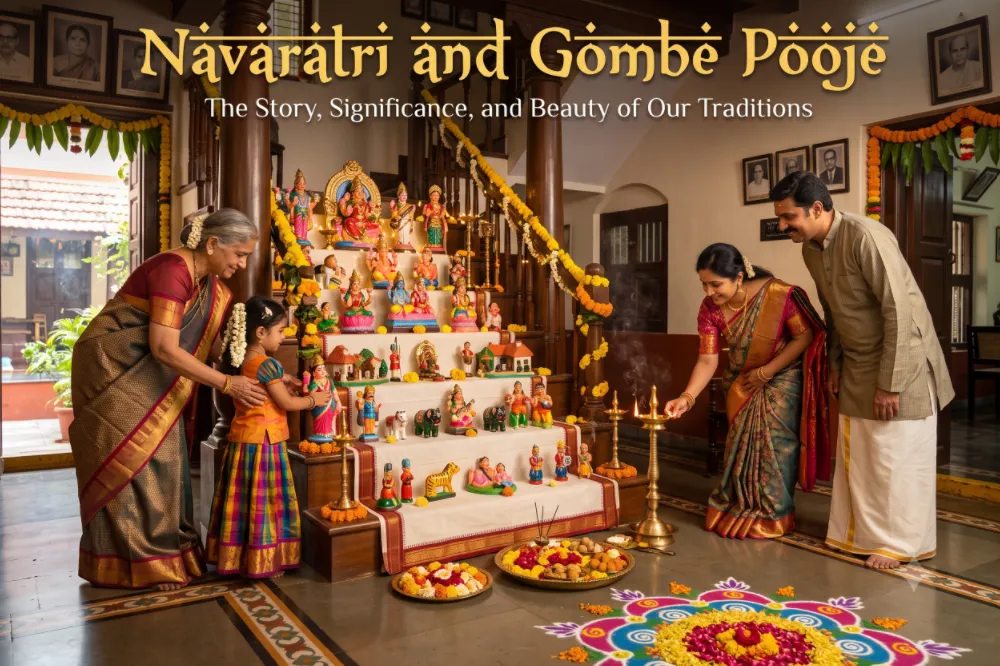
When Navaratri arrives, homes begin to look different. Colourful dolls appear on decorated steps, flowers brighten doorways, lamps glow in the evenings, and the fragrance of festive sweets fills the air. Families prepare for prayers, invite friends and relatives, and welcome the festival with devotion and joy.
But have you ever wondered why we celebrate Navaratri for nine nights? What is the story behind this festival, and why do we arrange dolls in our homes?
Behind these beautiful celebrations lies a powerful story of courage, faith, and good's victory over evil.
The Story Behind Navaratri
According to Hindu mythology, Mahishasura was a powerful demon who received a boon that made him believe no man or god could defeat him. With this power, he began troubling the gods and innocent people, spreading fear across the world.
Unable to defeat him, the gods prayed to the Divine Mother for help. Their divine energies came together to create Goddess Durga, a powerful form of feminine strength and courage.
Riding a lion and carrying divine weapons, Goddess Durga fought Mahishasura in a fierce battle that lasted nine days and nights. On the tenth day, she defeated him, restoring peace and balance.
This victory is celebrated as Vijayadashami, also known as Dussehra.
The story reminds us that arrogance, injustice, and evil cannot prevail forever. It also celebrates the strength of the Divine Mother and the power of courage and righteousness.
In many traditions, the nine nights are dedicated to different forms of the Goddess, each representing special qualities such as strength, knowledge, courage, and prosperity.
Navaratri is therefore not merely a festival of worship. It is a celebration of divine power and the enduring belief that good can overcome evil.
Why Is Navaratri Celebrated?
Navaratri holds deep spiritual and cultural significance across India, although the ways of celebrating it differ from region to region.
In Karnataka, Navaratri has a special connection with the Mysuru Dasara celebrations, known for their royal heritage, cultural programmes, and grand festivities. The tradition of celebrating Dasara in Mysuru is closely associated with the Wadiyar royal family.
For devotees, Navaratri is a time to worship the Goddess, offer prayers, observe fasting according to personal customs, and seek blessings for health, peace, and prosperity.
It is also a time to celebrate the qualities represented by the Divine Mother. Her strength reminds us to face difficulties with courage, while her compassion inspires us to care for others.
The festival brings together devotion, music, dance, traditional food, and family gatherings. Although customs may differ, the central message remains the same: celebrate goodness, respect the divine, and keep our traditions alive.
Gombe Pooje: A Special Tradition of Karnataka
One of the most beautiful Navaratri traditions in Karnataka is Gombe Pooje, also known as Bombe Habba.
During the festival, families arrange dolls on specially prepared steps, often called Gombe Bagilu. These displays may include gods and goddesses, scenes from the Ramayana and Mahabharata, village life, markets, animals, and traditional occupations.
Every arrangement tells a story. Some families create elaborate displays, while others arrange a small collection of treasured dolls. Many families carefully preserve their dolls and bring them out year after year.
Gombe Pooje is not just about decorating a home. It is a way of sharing mythology, culture, and family traditions with the younger generation.
Grandparents tell stories behind the dolls, parents help arrange the steps, and children eagerly participate in the preparations. What begins as a festive activity becomes a beautiful opportunity for generations to come together.
For many families, certain dolls carry special memories. An old doll passed down from a grandmother may be more precious than a newly purchased one because it connects the family with its past.
That is the beauty of Gombe Pooje: it keeps our stories and traditions alive through simple, meaningful practices.
The Tradition We Pass on to Our Children
In today's busy world, preserving cultural traditions is more important than ever. Festivals give children an opportunity to learn about their heritage through stories, rituals, music, and family participation.
When we explain the story of Goddess Durga, children learn about courage and the victory of good over evil. When we arrange dolls together, they discover traditional art, mythology, and the customs followed by their families.
These celebrations also create precious childhood memories. Years later, children may remember the dolls, the sweets, the evening prayers, and the excitement of welcoming guests into their homes.
We do not need expensive decorations or a large collection of dolls to make the festival meaningful. What matters is understanding the tradition and celebrating it with devotion and togetherness.
Let the Spirit of Navaratri Stay with Us
When the nine nights come to an end, the dolls return to their boxes, and the decorations are carefully put away. Yet the story of Navaratri continues to hold meaning beyond the festival.
May Goddess Durga's courage inspire us to stand against injustice. May her strength remind us to face difficulties with confidence, and may her compassion encourage us to treat others with kindness.
As we celebrate Gombe Pooje, let us pass on the stories, customs, and values that have travelled through generations.
The dolls may return to their boxes, but the devotion, memories, and cultural heritage they represent should never be forgotten. That is the true beauty of Navaratri and Gombe Pooje.