Number Sense - The Real Skill Behind Understanding Numbers
It’s not about knowing numbers… it’s about feeling and comparing them with clarity.
By Shwetha B R | 03, Apr, 2026 06:22 AM
Introduction:
Ask a child:
“Which is bigger - 98 or 102?”
Now observe.
Some children pause…
Some start counting in their mind…
Some try to calculate…
And some simply guess.
But here’s the real difference:
A child with strong number sense doesn’t stop to calculate.
They know
Not because they are faster…
Not because they memorised more…
But because they truly understand numbers.
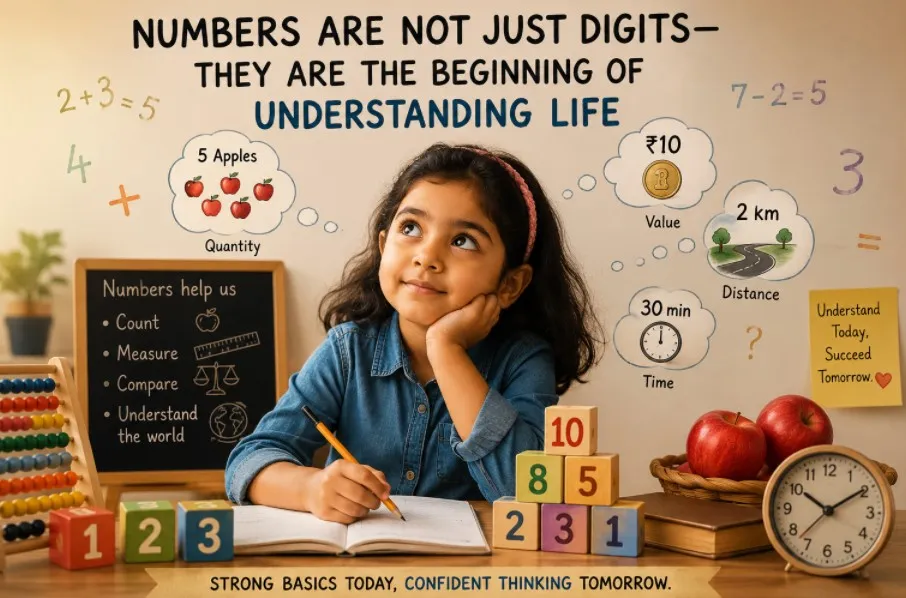
They can feel the size of numbers.
They can see the difference.
And that changes everything.
Because this is the line between:
- Memorising math ❌
- Understanding math ✔
What Is Number Sense - In Simple Words
Number sense is the ability to:
- Understand numbers
- Compare them easily
- Think about their size and value
- Use them naturally in daily life
It’s not a formula.
It’s a feeling for numbers.
Why Number Sense Matters More Than You Think
Without number sense:
- Children depend on counting for everything
- Simple comparisons take time
- Mistakes increase in calculations
With number sense:
- Thinking becomes faster
- Confidence improves
- Math feels easy and natural
“When a child develops number sense, numbers stop being confusing - they start making sense.”
Comparing Numbers - The Right Way to Think
Let’s not jump to symbols like > or < immediately.
First, build thinking.
Example 1:
Which is bigger, 45 or 54?
Think like this:
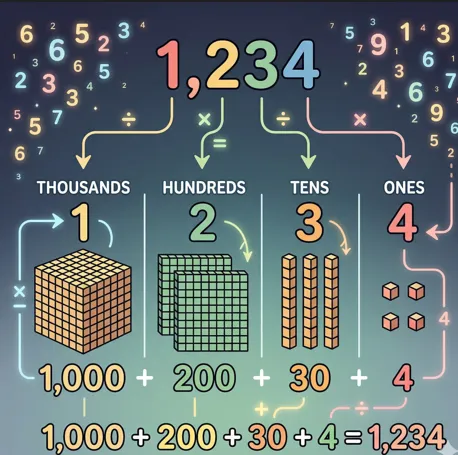
- 45 → 4 tens
- 54 → 5 tens
5 tens is bigger than 4 tens
So, 54 is bigger
Example 2:
Which is smaller, 209 or 290?
- 209 → 2 hundreds
- 290 → 2 hundreds
Same hundreds… now check tens:
- 0 tens vs 9 tens
0 < 9
So, 209 is smaller
This method builds logic, not guessing.
Why Children Get Confused While Comparing
Let’s be direct.
Children struggle because:
- They compare digits, not values
- They rush to answers
- They don’t break numbers properly
That’s why:
- They think 302 is smaller than 89
- Or 100 is smaller than 99
Not because they are weak…
But because their foundation is unclear.
Build Number Sense Through Daily Life
Make numbers real.
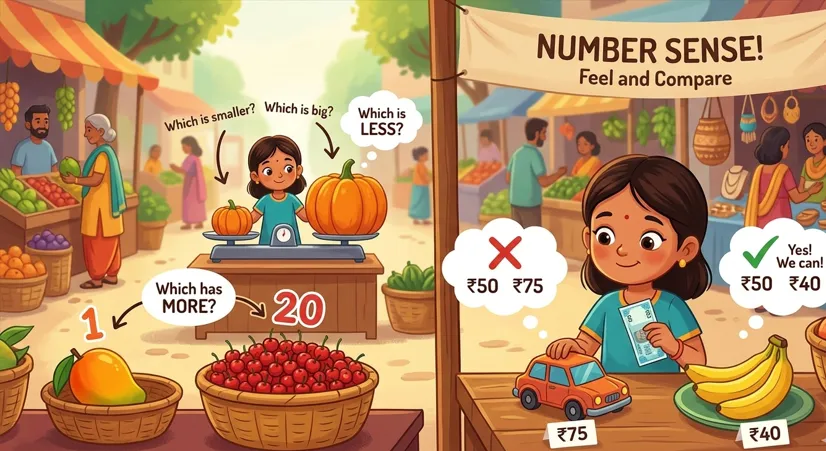
Shopping
- Compare prices
- Ask: “Which is cheaper?”
Time
- “Which is later - 3:45 or 4:15?”
Sharing
- “Who has more juice?”
These small questions build powerful thinking.
Simple Activities That Actually Work
Number Line Practice
Let children place numbers on a line.
They visually understand:
- Bigger numbers are on the right
- Smaller numbers are on the left
Estimation
Ask:
- “Is this number close to 50 or 100?”
This builds approximation skills.
Quick Comparison Questions
- Which is bigger: 78 or 87?
- Which is smaller: 150 or 105?
Encourage thinking, not speed.
Common Mistakes to Watch
- Comparing only the last digits
- Ignoring place value
- Guessing without thinking
- Rushing to use symbols (>, <)
Symbols should come after understanding, not before.
What Parents and Teachers Should Do
Focus on Thinking, Not Speed
In many classrooms and homes, speed is praised:
- “Answer fast!”
- “Why are you taking so long?”
But here’s the truth:
Fast answers without understanding create weak learners.
A child who answers quickly may not always understand.
They might be:
- Guessing
- Memorizing patterns
- Copying methods without clarity
Instead, encourage children to:
- Take their time
- Think step by step
- Explain how they got the answer
Because in mathematics,
The process matters more than the result.
Ask “Why?” Every Time
Most children are trained to give answers.
Very few are trained to think about their answers.
Instead of asking:
- “What is bigger?”
Start asking:
- “Why is it bigger?”
- “How do you know?”
This simple change:
- Builds logical thinking
- Improves clarity
- Reduces careless mistakes
At first, children may struggle to explain.
That’s okay.
That struggle is where real learning happens.
Be Patient - Real Learning Takes Time
Number sense is not something that develops in one day.
It grows slowly through:
- Repeated exposure
- Real-life experiences
- Thoughtful questioning
Many adults make this mistake:
- Expecting quick results
- Comparing children with others
- Pushing for immediate perfection
This creates pressure… not learning.
A child who is given time:
- Thinks deeply
- Understands clearly
- Builds long-term confidence
Remember:
“Slow learning with understanding is far more powerful than fast learning with confusion.”
Create a Safe Space for Mistakes
Children often fear giving wrong answers.
Because they are:
- Corrected immediately
- Judged
- Compared with others
But mistakes are not failures.
They are part of thinking.
When a child makes a mistake:
- Ask them to explain their thinking
- Help them find where it went wrong
- Guide them, don’t criticize
This builds:
- Confidence
- Curiosity
- Independent thinking
Encourage Daily Small Discussions with Numbers
You don’t need special time for teaching.
Use daily situations:
- “Which is more - 2 apples or 5 apples?”
- “Is ₹50 enough to buy this?”
- “Which number is closer to 100?”
These small conversations build strong number sense naturally.
A Thought to Reflect
“Children don’t learn mathematics by rushing through answers… they learn by understanding their thinking.”
Conclusion:
Number sense is not a chapter.
It is a lifelong skill.
When a child develops it:
- Comparisons become easy.
- Calculations become accurate.
- Confidence grows naturally.
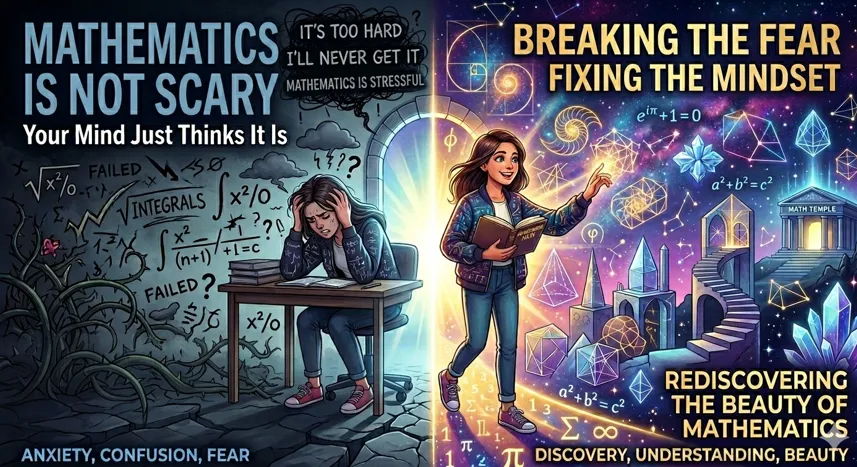
And most importantly - Math becomes something they understand - not something they fear.
Your Turn:
Have you noticed children guessing while comparing numbers?
What methods have worked for you?
Share your experience - your feedback matters more here.
Thank you for reading this article.